Pasta Carbonara


The ultimate, easy Italian entree – Pasta Carbonara. It’s an incredibly creamy, cheesy, spectacular recipe with 5 simple ingredients!
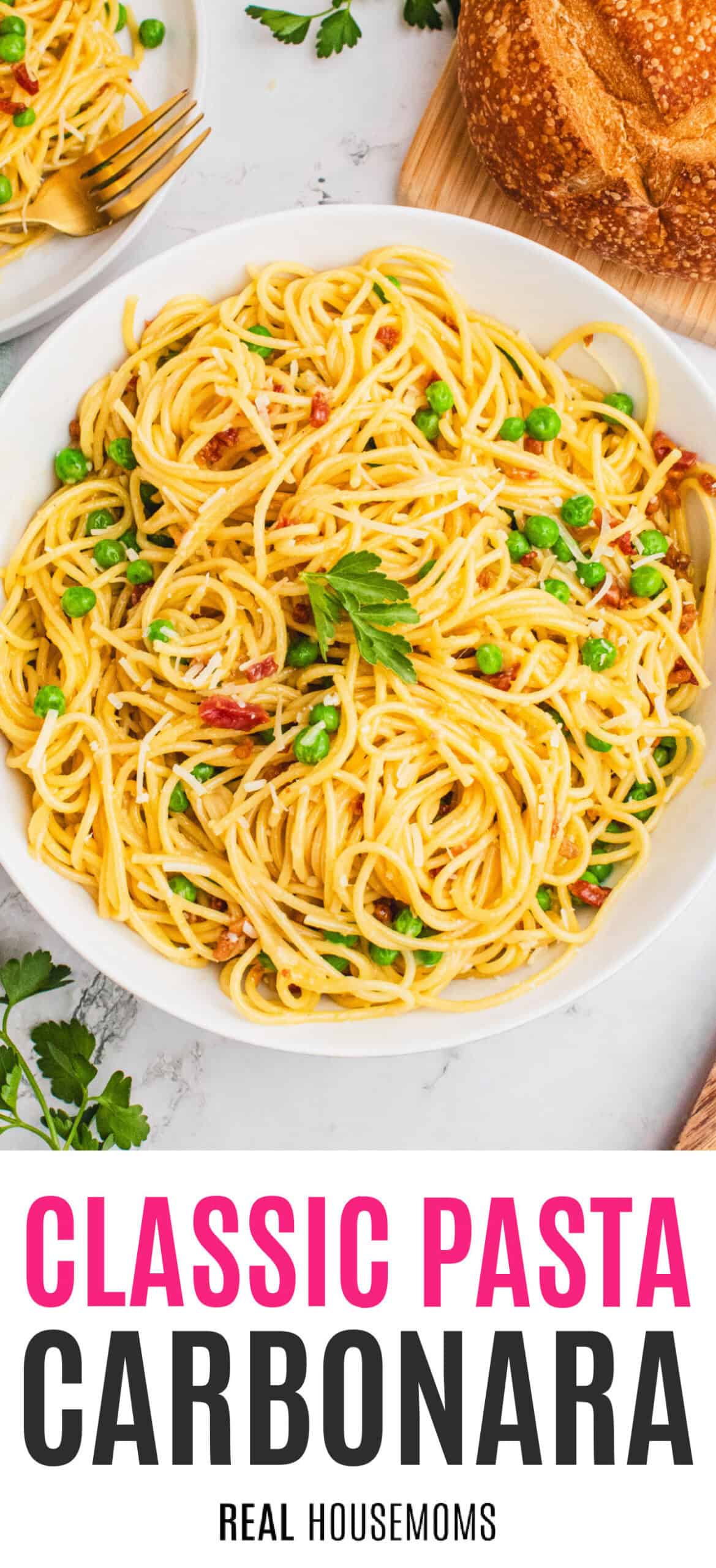
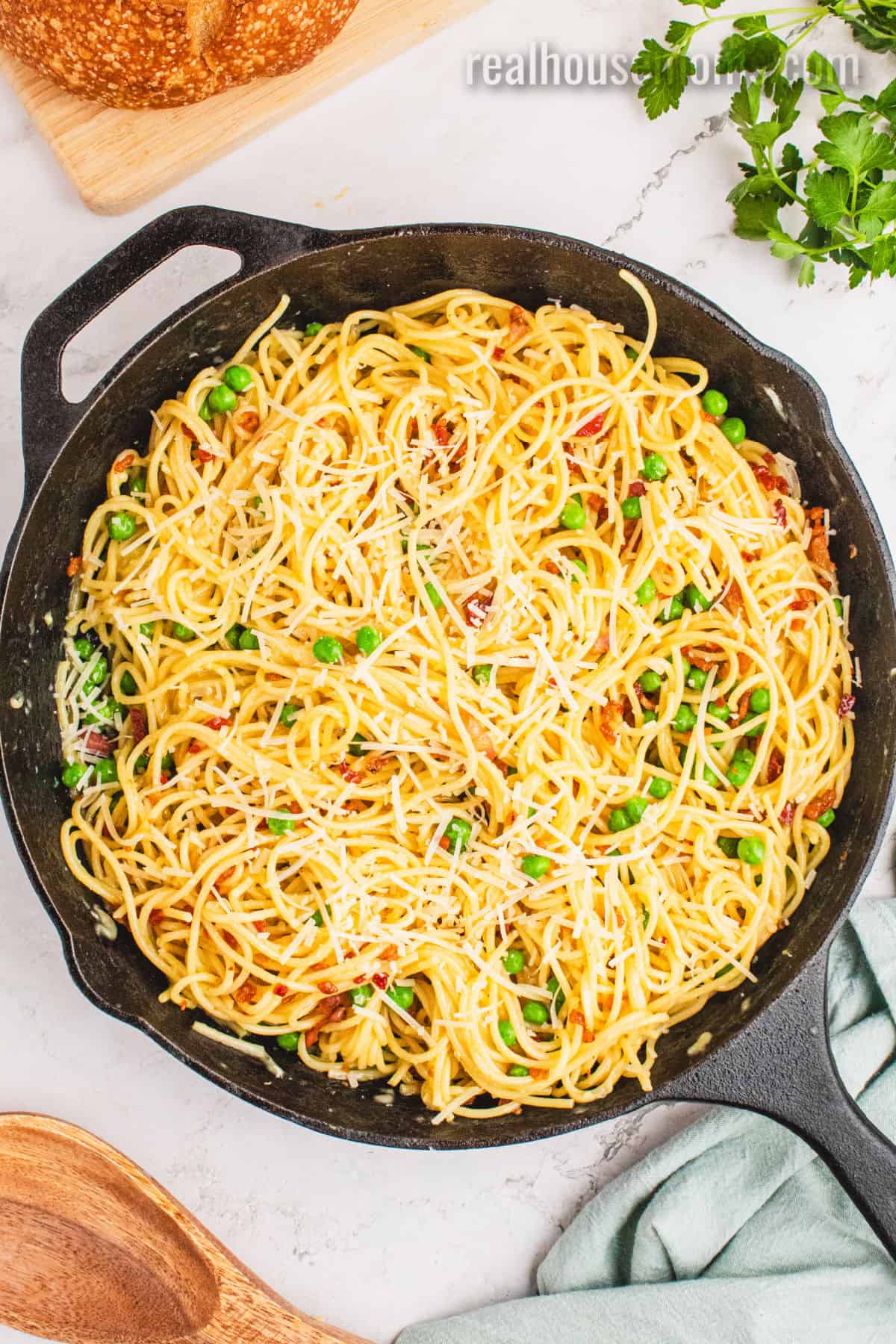
Mouthwatering Pasta Carbonara is a dish so delicious, so delectable, and so delightfully easy to make, if it’s not already one of your favorites, it soon will be! Our classic, authentic carbonara recipe is the BEST because it only needs a few quality ingredients (Spaghetti, eggs, prosciutto, Parmigiano Reggiano, and English peas), it cooks in just 15 minutes (making it an awesome recipe for last-minute company), and it tastes like a grand gourmet meal!
Carbonara is Creamy without the Cream!
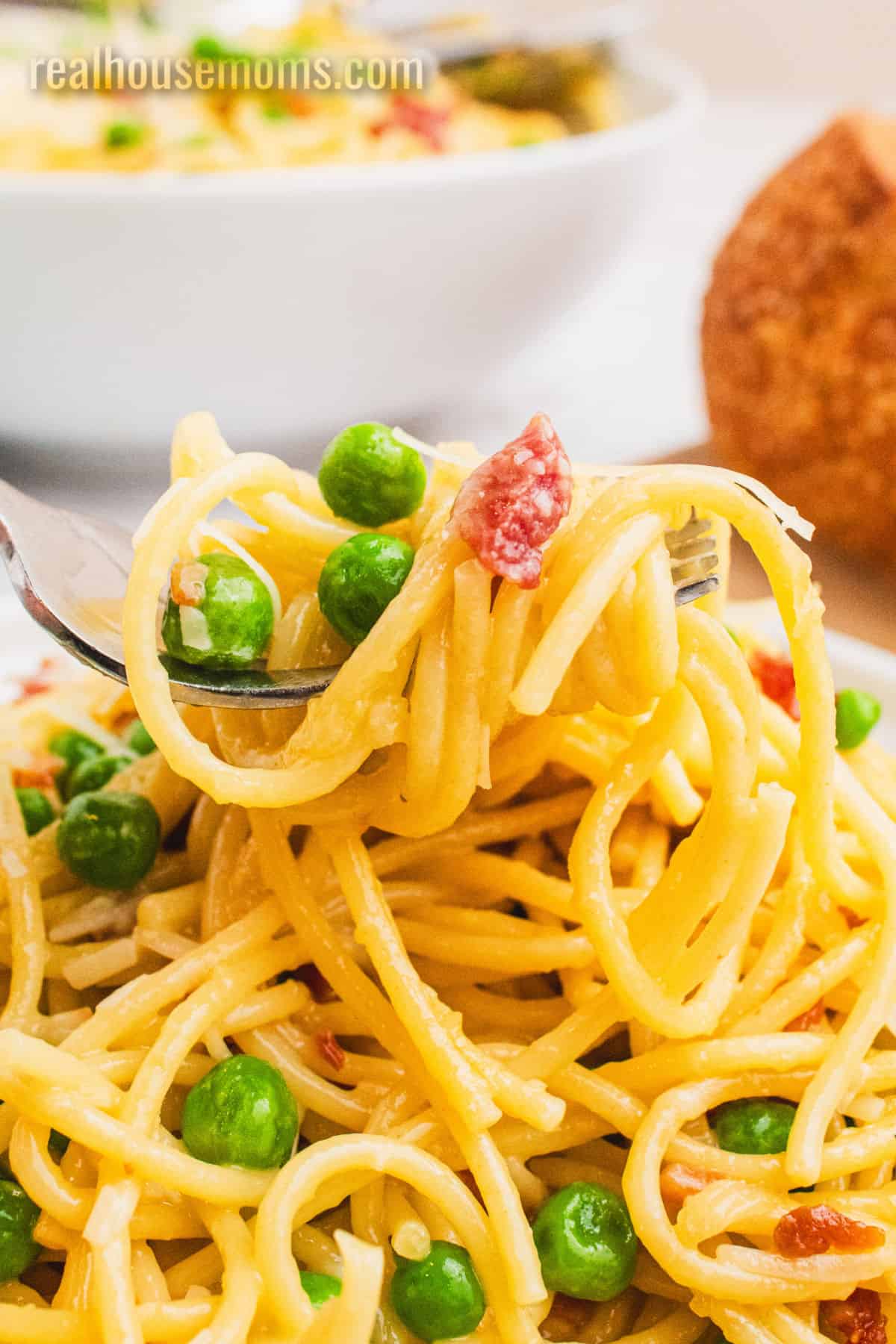
Real, traditional Spaghetti Carbonara is rich and creamy, but without cream or butter! This is important because adding additional dairy to this recipe alters the taste and texture. And while cream is essential for an amazing Alfredo sauce (like this luscious Lobster Alfredo!), the perfect Carbonara relies on beaten eggs and a generous splash of starchy pasta water to provide its fabulous flavor and silky feel!
Other Recipes for a Complete Italian-Inspired Dinner
- Antipasto Bruschetta is a crowd-pleasing appetizer that’s the perfect lead-in to any Italian dinner!
- If there’s anything more delicious than Pasta Carbonara, it’s Pasta Carbonara with indulgent, no-bake Italian Tiramisu for dessert!
Ingredients
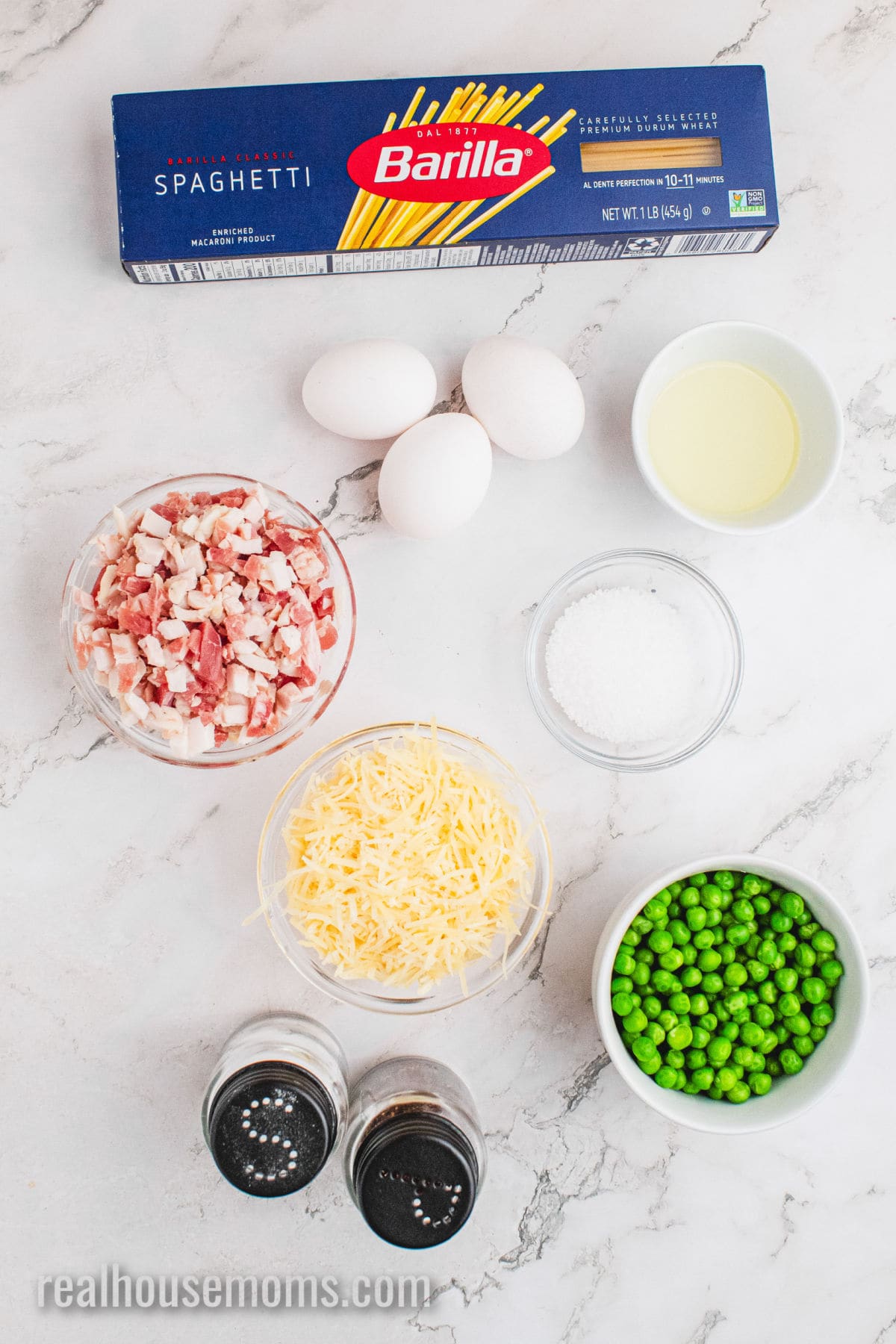
Pasta: Spaghetti makes the best Carbonara, but Linguine, Fettuccini, or Angel Hair are good substitutes!
Veggies: Frozen English Peas (AKA sweet peas) – I know peas aren’t always a favorite, but in carbonara they’re GREAT! They add a slight sweetness, a pop of bright green color and easy nutrition!
Meat: For our recipe, we’re using thinly sliced prosciutto, skillet-seared in extra-virgin olive oil. YUM. Other recipes sometimes use guanciale, pancetta or even thick-sliced bacon.
Sauce: While not technically a “sauce”, eggs and Parmigiano Reggiano (cheese) are whisked together with some of the starchy pasta water to create a luscious, cheesy coating for the spaghetti. SO GOOD.
How to Make Carbonara Pasta
STEP ONE: Generously add sea salt to a pan of water and set it on the stove to boil. While the water is heating, whisk the eggs and cheese together in a bowl. When the water starts to boil, cook the pasta according to the package directions to al dente. Before draining the pasta, remove a cup of pasta (use a heat-proof measuring cup!) and set it aside.
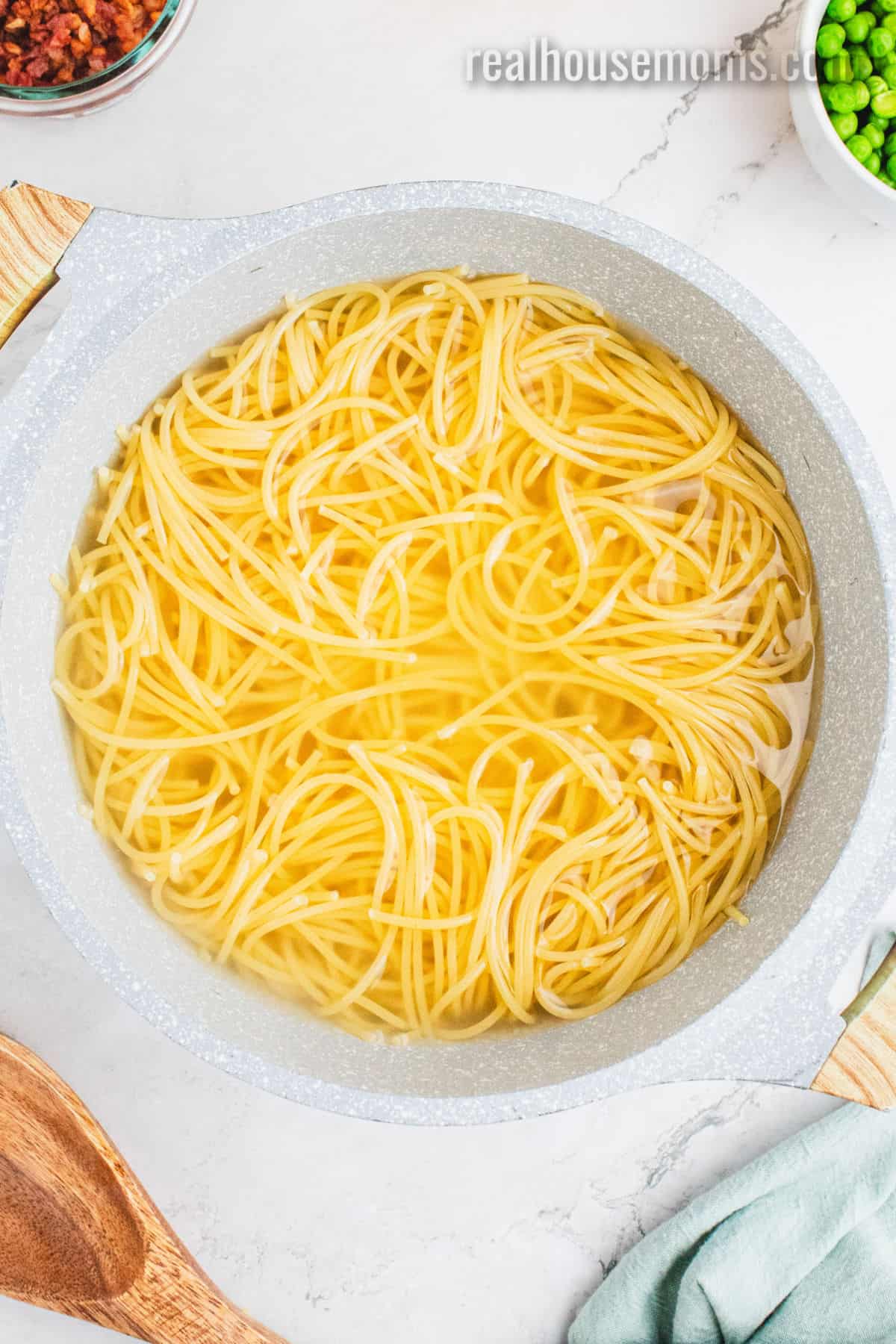
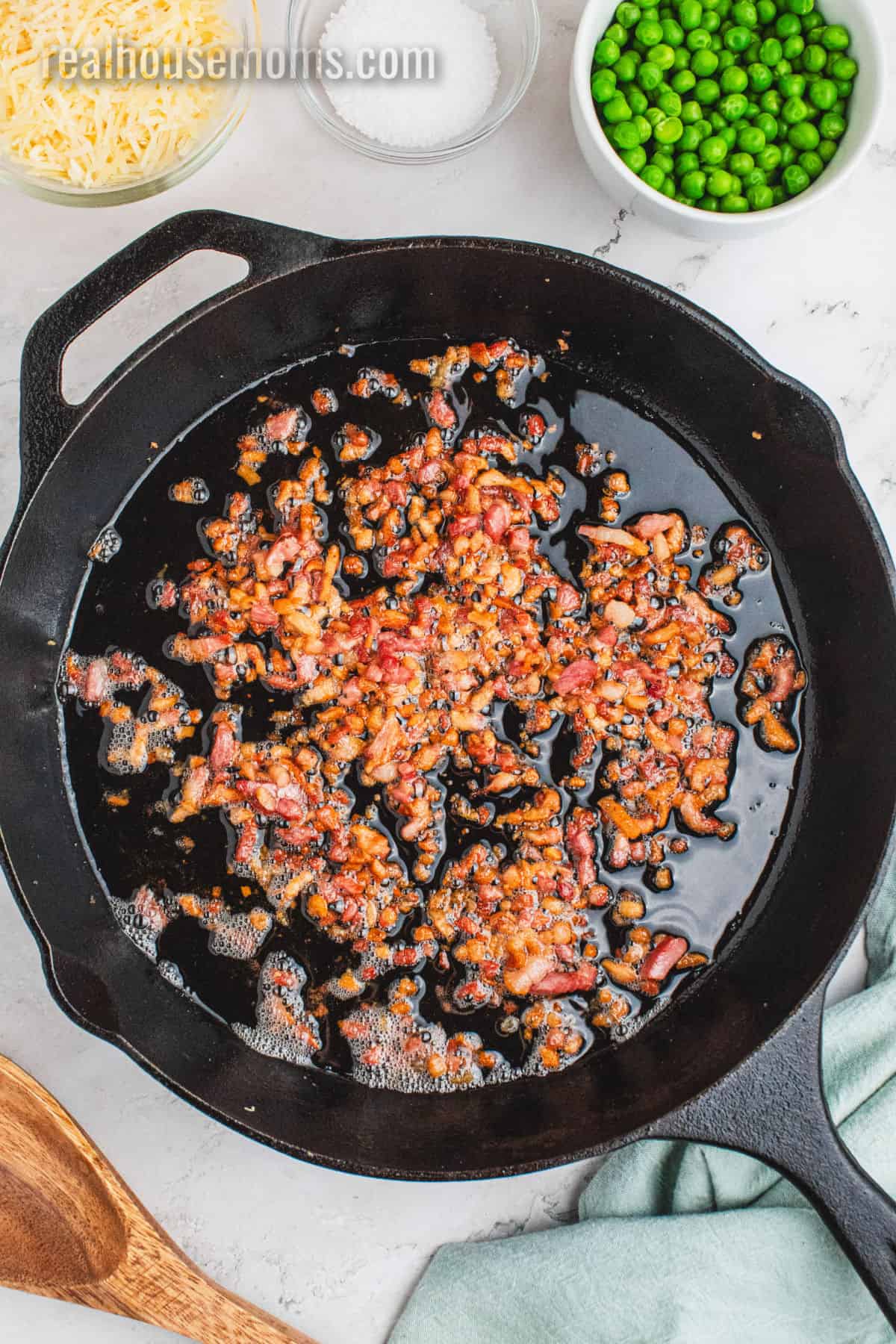
STEP TWO: Cook the prosciutto in a deep skillet with olive oil until crispy. Remove from the skillet and set aside. Pour off the oil and save it for later.
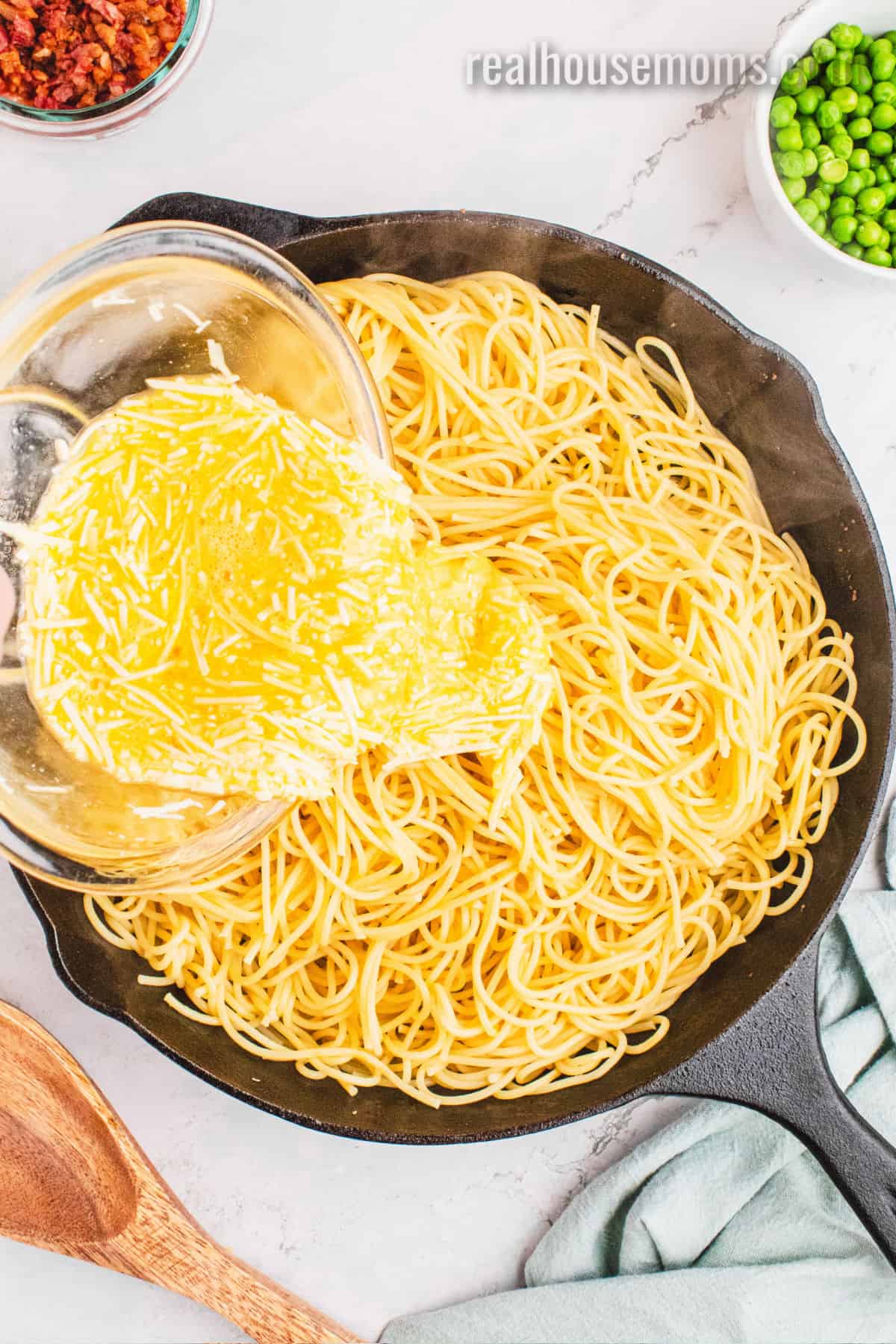
STEP THREE: Add 3 tablespoons of the pancetta grease back into the skillet over medium heat. (If needed, add extra olive oil to reach 3 tablespoons in total.) When the oil has warmed, add the cooked pasta and stir to coat it with the oil. Slowly add in the egg & cheese mixture, stirring and turning the pasta to coat all over. If needed, add small splashes of the reserved pasta water to make the sauce creamier.
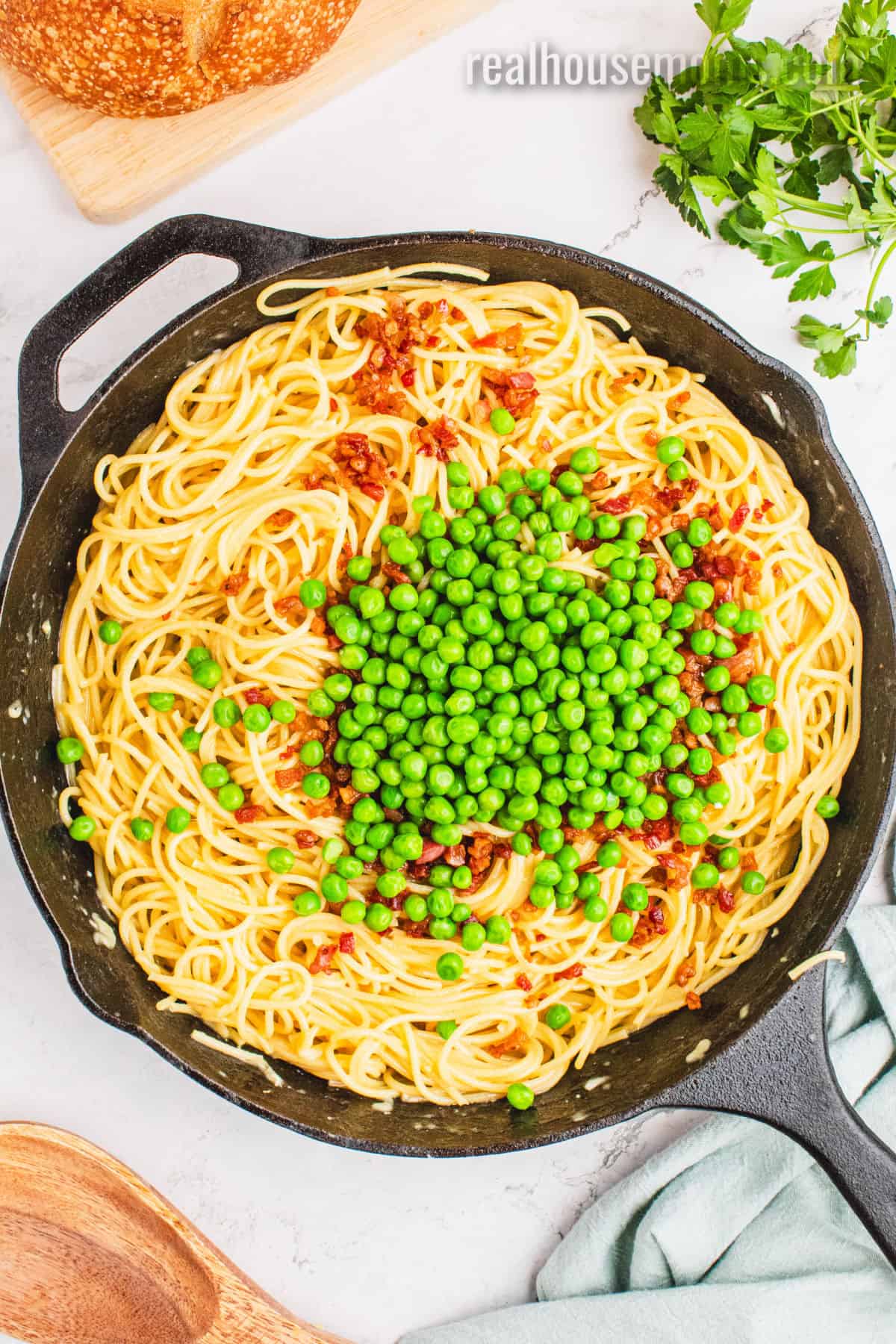
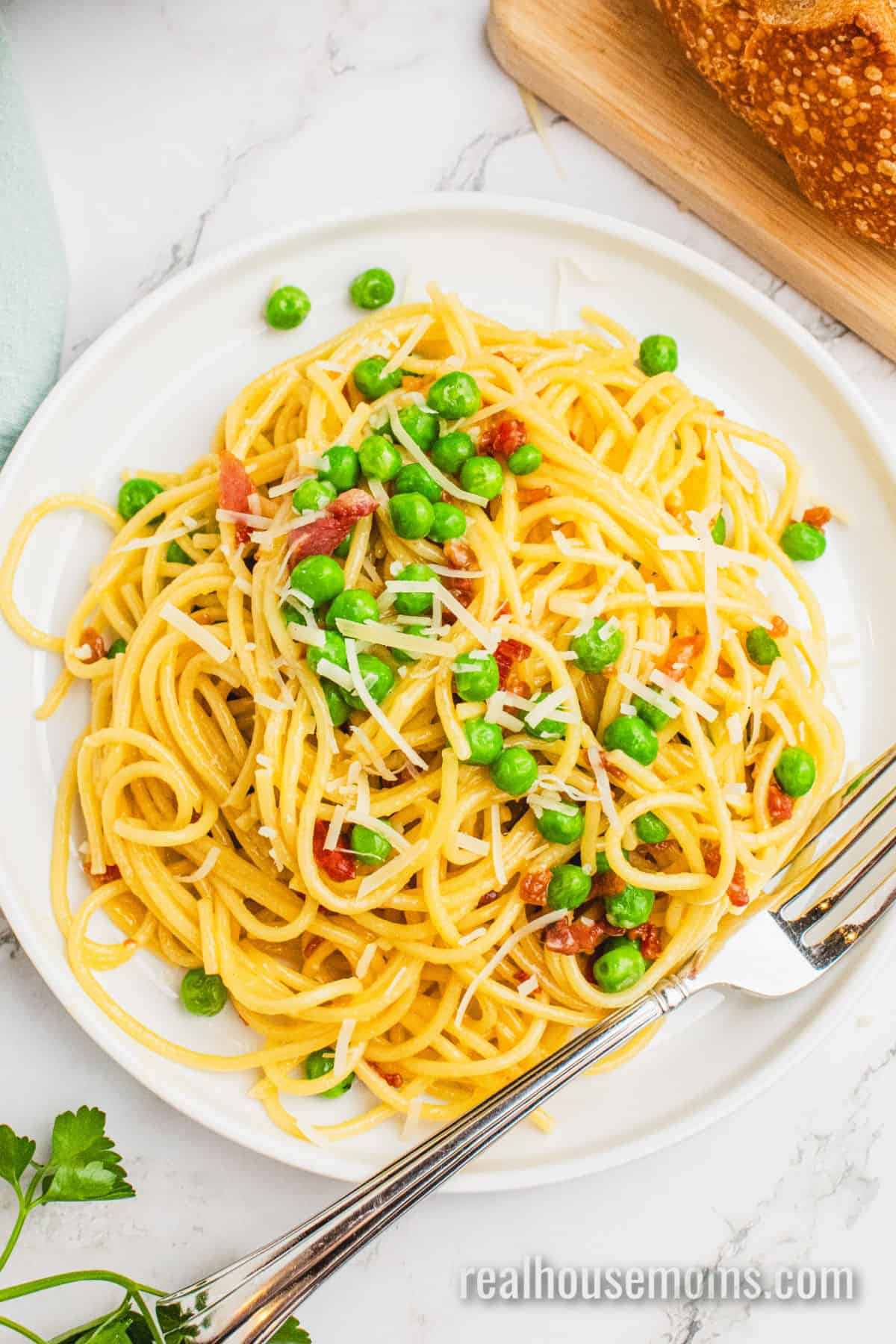
STEP FOUR: Add the prosciutto and English peas, tossing together until the peas are warm throughout. Serve with a garnish of additional Parmigiano-Reggiano, salt & pepper to taste. Enjoy!
Tips for Success
- Start with room temperature eggs. In a time crunch, set the eggs in a bowl of warm (not hot!) water for a few minutes.
- The key to a silky carbonara is whisking the egg whites with the yolks before adding to the pasta.
- Bacon and Parmesan can be a nice, more economical substitute for prosciutto and Parmigiano Reggiano.
- Adding pasta water at the very end of cooking will make the pasta extra smooth and creamy. The starchy water helps the sauce thicken with clumping.
- Classic Carbonara does NOT use cream or butter.
- Fettuccine, linguine, or angel hair can all be used instead of spaghetti.
What is Carbonara?
Pasta Carbonara is a very simple Italian classic made with spaghetti, pancetta (or prosciutto or bacon), eggs and cheese (specifically Pecorino Romano or Parmigiano Reggiano). Black pepper is used to season and green peas are often added. The key is to add the cooked pasta to the pan in which the pork was cooked, resulting in a flavorful, creamy dish without butter or cream.
How Do You Reheat Leftover Pasta Carbonara?
Spaghetti Carbonara is definitely a recipe that’s best enjoyed as soon as it’s made; however, if you have leftovers, we certainly don’t want it to go to waste! So, when rewarming this dish, add in a little liquid – water, chicken broth, even cream – and reheat it slowly, stirring as you go. It will be almost as good as new!
Other Incredible Italian Pasta Recipes
- Pasta Primavera
- Chicken Piccata
- Baked Ziti
- Toasted Ravioli
- Creamy Caprese Pasta
- Mushroom Rigatoni with Prosciutto
*This post originally posted on 10/01/2018.
Pasta Carbonara
Ingredients
- 1 pound spaghetti
- 2 tablespoons sea salt
- 2 tablespoons extra virgin olive oil
- 4 ounces prosciutto thinly sliced or diced
- 1 cup Parmigiano Reggiano
- 3 large eggs
- 1 cup frozen sweet peas thawed
- Salt & pepper to taste
Instructions
- Add the sea salt to a large pot of water and bring to a boil. Cook the spaghetti according to package instructions until al dente. Use a heat-proof measuring cup to reserve 1 cup of pasta water before draining the pasta.
- While the pasta cooks, add the olive oil to a deep-sided skillet over medium-high heat. Add the prosciutto and cook until crispy. Transfer the prosciutto to a paper towel-lined plate to drain.
- Pour off the grease from the skillet into a bowl. Add 3 tablespoons of grease back to the skillet. If you don't have a full 3 tablespoons, add enough olive oil to reach the full amount. Place the skillet over medium heat.
- In a medium bowl, whisk together the eggs and Parmigiano Reggiano cheese. Set aside.
- Once the oil is warm, add the cooked pasta to the skillet. Then slowly pour the egg mixture in while stirring and turning the pasta to coat it. If it becomes a little dry (clumpy), add a couple of splashes of the reserved pasta water as needed to loosen up the sauce.
- Add the cooked prosciutto and peas, and toss together until the peas are warmed through. Season with salt and pepper to taste.
- Serve warm with a little extra Parmigiano Reggiano sprinkled over the top.