


Roasted vegetable curry is made with sweet potatoes, carrots, cauliflower, and peppers, then oven-roasted and finished in coconut-tomato sauce.

Roasting the vegetables first is what makes this curry work so well. It builds deeper flavor, gives the veggies browned edges, and helps them stay tender without getting mushy once they’re added to the sauce. With coconut milk, tomatoes, curry paste, ginger, and lime, the sauce comes together in a way that feels rich, balanced, and easy enough for a family dinner.
Readers love how easy this curry is to make their own for weeknight dinners or meal prep, since you can swap the veggies and adjust the spice to fit your family.
Table of contents
Why You’ll Love This Easy Curry Dinner
This is one of those dinners that feels a little more special than the usual weeknight routine without making extra work for you. The sauce is rich and full of curry flavor, the roasted vegetables make it filling enough to stand on its own, and it’s easy to serve with rice or naan, depending on what you have on hand. It’s also a great option when you want a meatless dinner that still feels hearty and satisfying.
Ingredients
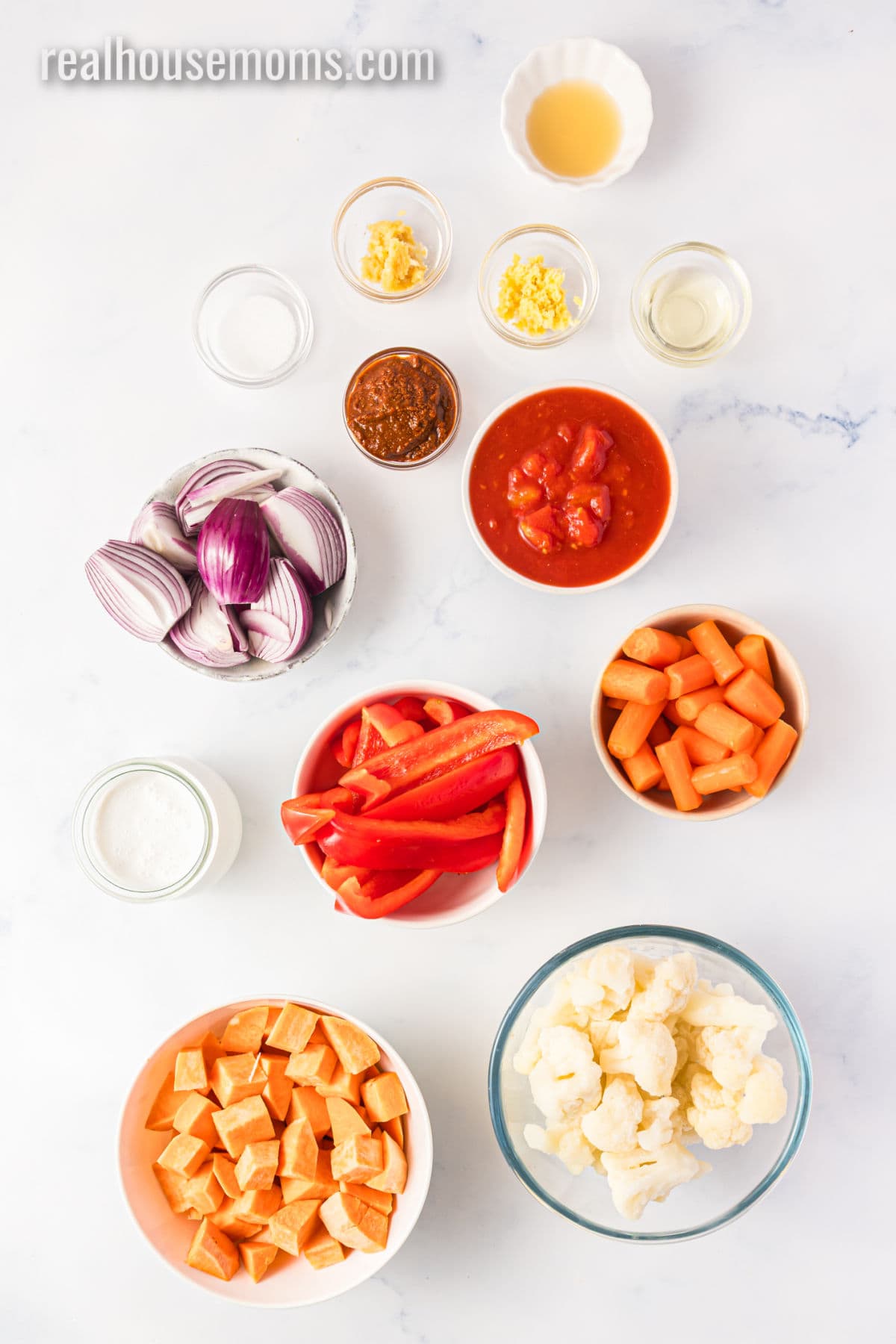
This curry comes together with simple vegetables and a few pantry staples, but each one contributes to the sauce’s richness and creaminess, making it so satisfying.
- Veggies: Sweet potato makes this curry hearty and adds a little sweetness that pairs well with the sauce. Carrots and red onion add more flavor and texture, while bell pepper brings a little sweetness and color. Cauliflower is especially good here because it soaks up the sauce really well, and it’s also one of the easiest veggies to swap if you want to use what you already have in the fridge.
- Flavor builders: Fresh garlic and ginger add so much flavor to the sauce and help keep it tasting bright and balanced. Lime juice gives the curry a fresh pop at the end, and extra lime wedges are always great for serving.
- Pantry items: Indian curry paste is where most of the flavor comes from, so pick one with a spice level your family will enjoy. Diced tomatoes and coconut milk come together to make the sauce rich, creamy, and full of flavor. A little sugar helps balance everything out, and avocado oil is used to roast the vegetables and cook the sauce.
Best Vegetables for Curry
The best vegetables for this curry are those that hold up well in the oven and remain tender once added to the sauce. Sweet potatoes, carrots, cauliflower, onions, and bell peppers are all great choices because they roast up beautifully and add plenty of color, texture, and flavor to the curry. You can also swap in vegetables like broccoli, zucchini, eggplant, or butternut squash if that’s what you have on hand. Just keep in mind that softer vegetables may cook faster, so it helps to watch the roasting time and cut everything into similar-sized pieces so the veggies cook evenly.

How to Make Roasted Vegetable Curry
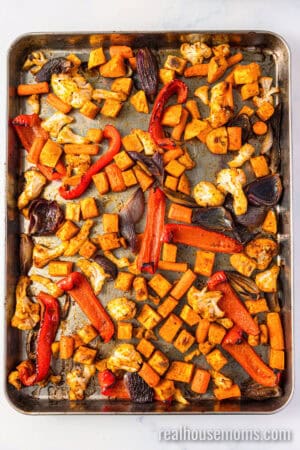
STEP ONE: Start by roasting the vegetables until they are lightly browned around the edges and the sweet potatoes are tender. This is where so much of the flavor comes from because the vegetables get a little caramelization and don’t just soften in the sauce.
STEP TWO: While the vegetables are in the oven, simmer the curry sauce until it smells rich and fragrant and has thickened just enough to coat a spoon. You want it creamy and full of flavor, so it clings to the vegetables rather than pooling beneath them.
STEP THREE: Once everything comes together, let the roasted vegetables warm through in the sauce for a few minutes so they soak up all that curry flavor without losing their texture. By the end, the vegetables should be coated, the sauce should look silky, and the whole dish should feel hearty enough to serve with rice and naan for an easy dinner.
Tips for Success
- Roast the vegetables in a single layer, leaving a little space in the pan so they caramelize rather than steam. If the pan feels crowded, use two baking sheets so you still get those browned edges and better flavor.
- Use a curry paste you already like, since it provides most of the sauce’s flavor. Mild curry paste is great for keeping dinner family-friendly, but you can always go hotter if you want a little more kick. Thai red curry paste is spicier than Indian curry paste and does not have the same flavorings.
- If the curry tastes a little too rich at the end, a squeeze of lime can wake everything right back up. That little bit of acid helps balance the coconut milk and brings all the flavors together.

Ingredients
- 3 tablespoons avocado oil
- 2 tablespoons Indian curry paste
- 1 red bell pepper cored and cut into strips
- 2 red onions peeled and quartered
- 2 medium carrots peeled and chopped into 1-inch pieces
- 1 medium sweet potato peeled and chopped into 1-inch pieces
- 2 cups cauliflower florets (½ small head)
- 3 cloves garlic minced
- 1 tablespoon fresh ginger peeled and grated (1-inch nub)
- 14 ounces canned diced tomatoes
- ¾ cup coconut milk
- 1 tablespoon lime juice (1/2 lime)
- 1 teaspoon granulated sugar
- fresh parsley chopped, for garnish
- lime wedges for garnish
Instructions
- Preheat your oven to 400 degrees F. In a small bowl, stir together 2 tablespoons avocado oil and 1 tablespoons Indian curry paste.

- Arrange 1 red bell pepper, 2 red onions, 2 medium carrots, 1 medium sweet potato, and 2 cups cauliflower florets out on a baking sheet. Pour the curry oil over the veggies and toss until evenly coated. Spread the veggies out into a single layer.
- Roast for 40-45 minutes, or until tender and slightly caramelized around the edges. Stir halfway through cooking.
- While the veggies are roasting, place a large pot over medium heat and pour in 1 tablespoons avocado oil. Once hot, add 3 cloves garlic and 1 tablespoon fresh ginger. Cook for 1-2 minutes, stirring constantly. Stir in the remaining 1 tablespoons Indian curry paste and cook for 30-60 seconds to release its full flavor.
- Pour in 14 ounces canned diced tomatoes, 3/4 cup coconut milk, 1 tablespoon lime juice, and 1 teaspoon granulated sugar. Stir and bring to a gentle simmer, cook for 5-7 minutes until the sauce has thickened slightly.
- Once the veggies are done roasting, add them to the pot with the curry sauce and stir to combine. Simmer for another 2-3 minutes.
- Serve warm over cooked rice with naan bread. Garnish with chopped fresh parsley or cilantro with a couple of lime wedges on the side.




Notes
Nutrition

FAQ
Yes! You can roast the vegetables and make the sauce ahead, then warm everything together when you’re ready to serve. It’s a great make-ahead dinner option.
That really depends on the curry paste you use. I made this one with mild Indian curry paste to keep it more family-friendly, but you can easily turn up the heat with a spicier paste or a sprinkle of red pepper flakes at the end.
Yes. For the closest creamy texture, cashew cream is a great dairy-free swap. If dairy works for you, heavy cream or plain yogurt can also work, but the curry will lose a little of that classic coconut flavor. Full-fat canned coconut milk will still give you the richest sauce.
A few simple things make a big difference: roast the vegetables until they get browned edges, let the sauce simmer until it smells rich and fragrant, and finish with lime for a little brightness right before serving.

Storage and Reheating
Roasted vegetable curry stores really well, which makes it great for leftovers. Keep it in an airtight container in the refrigerator for up to 3 to 4 days, then reheat on the stovetop or in the microwave until hot. If the sauce thickens in the fridge, stir in a splash of water or coconut milk to loosen it back up.
Can I freeze it?
Yes. You can freeze the curry in individual portions for up to 3 to 4 months. Just thaw it in the fridge overnight and reheat when you’re ready to serve.
Other Recipes to Serve with Roasted Vegetable Curry
This curry is so good served with basmati rice and warm naan to soak up all that sauce. If you want to keep things a little lighter, try it with cauliflower rice or add a simple cucumber salad on the side.
Looking for more easy vegetarian dinners? Try these next!
These easy dinner recipes are full of vegetables and perfect for mixing up your weekly meal plan.
- Vegetable Lo Mein
- Easy Eggplant Parmesan
- Sweet Potato and Black Bean Quesadillas
- Curried Couscous with Broccoli and Feta
- Summer Veggie Udon Noodle Stir Fry


Leave a Reply